
Where to Build and How to Win: Regional Strategy for RV Storage in 2026
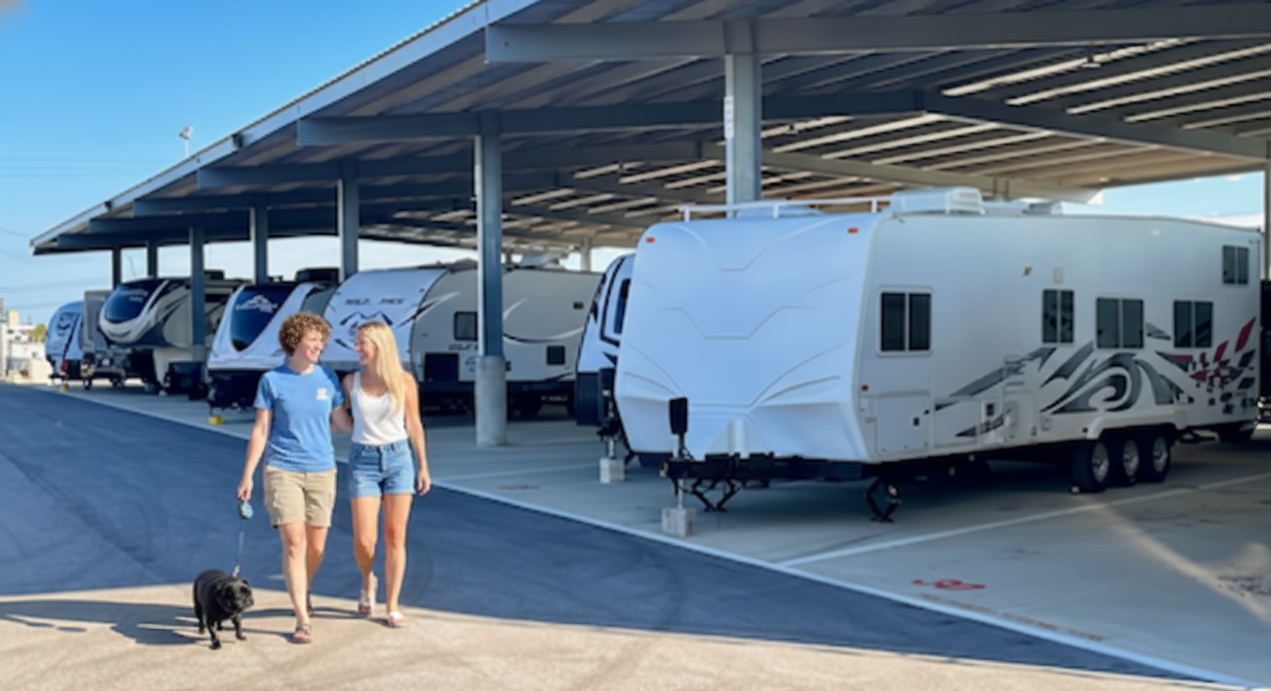
You know the market has corrected. You understand who your customers are. Now comes the million-dollar question: Where should you build, and what should your facility actually look like?
With RV ownership down to 8.1 million households but those owners using their RVs 50% more than before, the storage market has become a game of strategic positioning. Build in the wrong market, and you'll face oversupply and rate pressure. Build in the right one with the right amenities, and you'll have a waitlist.
Let's dive into where the opportunities actually are.
Regional Realities: Where the Action Is
If you're considering developing a new RV storage facility or expanding, location matters more than ever. The conventional wisdom of "build near population centers" doesn't tell the whole story. Here's what the data actually shows:
Top States for RV Ownership Per Capita:
Alaska (makes sense — lots of wilderness, limited road infrastructure)
Oregon (outdoor culture + van life = boom)
Montana (wide-open spaces meet HOA restrictions)
Minnesota (lakes + camping culture)
South Dakota (strong outdoor recreation culture + hunting and fishing tradition)
Top States for Total RV Shipments (Where the Vehicles Actually Go):
Texas (9.29% of all shipments) — massive population + outdoor lifestyle
California (6.53%) — largest state economy + vast camping opportunities
Florida (6.34%) — snowbirds + year-round camping
Indiana (3.90%) — heart of RV manufacturing, where workers in the industry also become RV owners themselves
Michigan (3.85%) — Great Lakes + manufacturing hub
Developer insight: Notice anything? The per-capita ownership leaders (Alaska, Montana) aren't the same as the volume leaders (Texas, California, Florida). This creates two different opportunities:
In high-volume states (TX, CA, FL): Competition is fierce, but demand is massive. You'll need to differentiate on amenities, technology, and service. These markets can support premium facilities with climate control, full-service maintenance bays, and concierge services.
In high-per-capita states (AK, OR, MT): Less competition, but smaller total market. Here, you're often the only game in town, which means you can charge premium rates even with basic amenities. However, economic sensitivity is higher — one bad season can impact your entire customer base.
The HOA Storage Gold Mine
Here's an underappreciated trend: Montana and much of the West lead in RV ownership partly due to HOA restrictions on parking. Homeowners literally cannot park their RVs at home, creating mandatory demand for storage.
Strategic opportunity: If you're near newer suburban developments with strict HOA covenants, you essentially have a captive audience. Marketing to HOA communities directly ("We're your approved RV parking solution") can be incredibly effective.
The same trend is accelerating in California, where densely packed housing and high real estate costs mean there's literally no room for a 35-foot fifth wheel in someone's driveway — even if the HOA allowed it.
Consider this: In a typical suburban development built after 2010, HOA covenants prohibit:
RVs parked in driveways (visible from street)
RVs parked in side yards (unless behind a 6-foot fence, which many lots can't accommodate)
Street parking for vehicles over a certain length
Result? Every RV owner in a 15-mile radius needs storage. Your marketing practically writes itself.
Midwest and Mountain Markets: The Quiet Winners
While everyone was chasing the Sunbelt boom, something interesting happened in the Midwest and Mountain states.
Chicago and Minneapolis are leading in RV storage rent growth (+4.2% and +1.6% respectively), while many Sunbelt markets face pressure from oversupply. Why?
Limited new supply in Midwest markets (everyone built in Texas and Florida)
Strong RV ownership culture (lakes, camping, outdoor recreation)
Seasonal storage demand creating predictable revenue patterns
Less competition from informal storage options
The Sunbelt Reality Check: Texas and Florida saw massive overbuilding during the pandemic boom. If you're considering these markets in 2026, do serious feasibility studies. Some suburban nodes are oversaturated, which is dragging down rates industry-wide.
But don't write off the Sunbelt entirely. Secondary and tertiary markets in these states — places like Ocala, Florida or College Station, Texas — may still have opportunity if they're near recreational destinations and haven't been overbuilt.
The "50-Mile Business" Principle
Here's something that fundamentally changes RV storage site selection: Unlike traditional self-storage (which is typically a 3-5 mile business), RV owners will drive 50+ miles for the right facility.
Why? Because they're already planning to drive their RV hundreds or thousands of miles on their trip. An extra 30-40 minutes to get to a superior storage facility with better security, climate control, or amenities? That's nothing.
This completely changes site selection strategy.
You don't need to be in the densest population center. You need to be:
Near travel corridors (highways, interstate exits)
Close to recreational destinations (lakes, national parks, camping areas)
Accessible from suburban RV owner concentrations
A facility 40 miles outside a major metro, right off the highway near lake country? That might outperform a facility in the city itself — especially if land costs are 70% lower.
Real-world example: A facility outside Raleigh, North Carolina, positioned between the city and the Outer Banks, draws customers from a 60-mile radius. They charge premium rates because they're "on the way" to where people are going anyway. Location isn't just about proximity to homes — it's about proximity to destinations.
What's Actually Working in 2026
The facilities seeing rent growth and sustained occupancy share common characteristics. This isn't speculation — this is what the data shows is working:
Class A Amenities:
Climate-controlled covered storage — protecting against sun damage, weather, and temperature extremes
Solar integration — increasingly important to younger, eco-conscious owners and reduces operating costs
Full-service infrastructure — dump stations, wash bays, tire air stations, water hookups
Security systems — cameras, gated access, perimeter fencing (family owners especially value this)
Electric hookups for battery maintenance
Smart Technology:
Online booking and account management — younger owners expect this
App-based gate access — no more lost key fobs or office hour restrictions
Digital payment systems — auto-pay, online invoicing, text reminders
Real-time availability displays — on your website and in the facility
Additional Services That Drive Revenue:
On-site maintenance partnerships — local mobile mechanics who work at your facility
Detailing services — many owners will pay $200-400 for a full detail before/after trips
Winterization prep — in cold climates, this is essential and commands premium pricing
Pre-trip inspections — safety checks that give owners peace of mind
These aren't luxuries — they're becoming standard expectations, especially for younger owners who are willing to pay for convenience.
The Premium vs. Value Equation: In oversupplied markets, basic uncovered parking is commoditized and facing rate pressure. But premium covered storage with full amenities? Still commanding strong rates and occupancy. The middle ground is the dangerous place to be.
Market-Specific Strategies
If You're Building in Texas or Florida (High Competition Markets):
Don't compete on price alone. You'll lose. Instead:
Build Class A facilities with superior amenities
Target specific niches (luxury motorhome owners, families, remote workers)
Offer bundled services (storage + maintenance + detailing)
Create a community experience (customer events, RV clubs, trip planning workshops)
Position near recreational destinations, not just population centers
The key: In saturated markets, you need a reason for customers to choose you beyond "we have space available."
If You're Building in Midwest or Mountain States (Underserved Markets):
You can succeed with a simpler model:
Basic covered storage with good security
Essential amenities (wash bay, dump station)
Reasonable pricing (you're probably the only option nearby)
Focus on service and relationships
The key: In these markets, just being reliable and accessible can win. You don't need all the bells and whistles — but you do need to execute the basics flawlessly.
If You're Building Near HOA-Heavy Suburbs:
You have a captive audience:
Marketing directly to HOA communities
Partnerships with real estate agents and HOA management companies
Amenities that make the facility feel like a "premium" solution rather than just compliance
Consider offering pick-up/delivery services (for an upcharge)
The key: Position as the approved, preferred solution. HOA residents often have higher incomes — they'll pay for quality and convenience.
Site Selection Checklist for 2026 Developers
Before you buy that land or break ground, here's what you need to verify:
Market Fundamentals:
[ ] RV ownership per capita in the county/region
[ ] Recent trends (growing or declining)
[ ] Existing supply within 15-mile radius
[ ] Occupancy rates at competitor facilities
[ ] Average rental rates (covered vs. uncovered)
Location Factors:
[ ] Proximity to interstate or major highway (ideally <5 miles)
[ ] Distance to major recreational destinations
[ ] HOA restrictions in surrounding neighborhoods
[ ] Zoning allows RV/boat storage (and won't change)
[ ] Access to utilities (electric, water, sewer)
Competitive Analysis:
[ ] Age and quality of existing facilities
[ ] Amenity offerings at competitors
[ ] Customer reviews (what are people complaining about?)
[ ] Pricing structure (monthly vs. annual discounts)
[ ] Waitlists or easy availability
Demographics:
[ ] Median age in target market (younger = better long-term)
[ ] Household income levels
[ ] New housing development patterns
[ ] Local recreational activity (camping, fishing, boating)
The 2026 Developer Edge: Lower land prices and cooled competition actually improve your entry opportunity — assuming you're building in the right markets with proper feasibility studies. The successful 2026 developer isn't chasing trends; they're finding underserved pockets with genuine demand.
Future-Proofing Your Investment
Whether you're building new or upgrading existing facilities, these trends should inform your decisions:
1. Plan for Smaller Units
The industry is shifting toward Class B vans and smaller travel trailers. Consider:
Mixing unit sizes (not just 40-foot spaces)
Narrower spaces for smaller units (charge less, fit more)
Urban-focused facilities for van life crowd
2. Build in EV Infrastructure
Electric tow vehicles are coming. Future-proof by:
Running conduit for future EV chargers even if you don't install them yet
Electrical capacity to add charging stations later
Designated EV charging parking areas in your plans
3. Climate Control Is Becoming Standard
In premium markets, covered storage isn't enough anymore. Consider:
Full climate control for luxury units
At minimum, covered storage with good ventilation
Protection from extreme heat (solar panels create shade + power)
4. Security Demands Are Increasing
Family owners especially value security:
24/7 camera coverage with remote viewing
Individual unit alarms (available as premium add-on)
Well-lit facilities
Perimeter fencing with limited access points
5. Community Creates Loyalty
The facilities with highest retention aren't just parking lots:
Customer appreciation events (RV show-and-tell, trip planning workshops)
Partnerships with local RV clubs
Online community groups for customers
Educational resources (blog, videos, maintenance tips)
The Bottom Line: Strategic Positioning Wins
The RV storage market of 2026 isn't about building the most spaces — it's about building the right spaces in the right places for the right customers.
Winning strategies:
In oversupplied markets: Differentiate through premium amenities and services
In underserved markets: Execute the basics flawlessly and capture market share
Near HOAs: Position as the preferred compliance solution
Near destinations: Market the "on your way" convenience factor
For young families: Create family-friendly, tech-forward experiences
The facilities succeeding in 2026 understand that RV storage isn't a commodity business anymore. It's a service business where location, amenities, technology, and customer experience all matter.
With RV owners using their units 50% more than before (30 days vs. 20 annually), the storage facility has become part of their lifestyle, not just a place to park. The operators who recognize this — and build accordingly — will capture the highest-quality customers and command premium rates.
The 8.1 million RV-owning households represent real, sustainable demand. The question is: will your facility be positioned to capture it?
This is Part 3 of a three-part series on the evolving RV storage market. Part 1 explored the market correction from 2021-2025. Part 2 examined the new RV owner demographics.
Market data compiled from RVIA 2021 and 2025 Owner Demographic Profiles, Yardi Matrix storage analytics, Loan Analytics RV Storage Demand Opportunity Index, and state-level RV registration data.